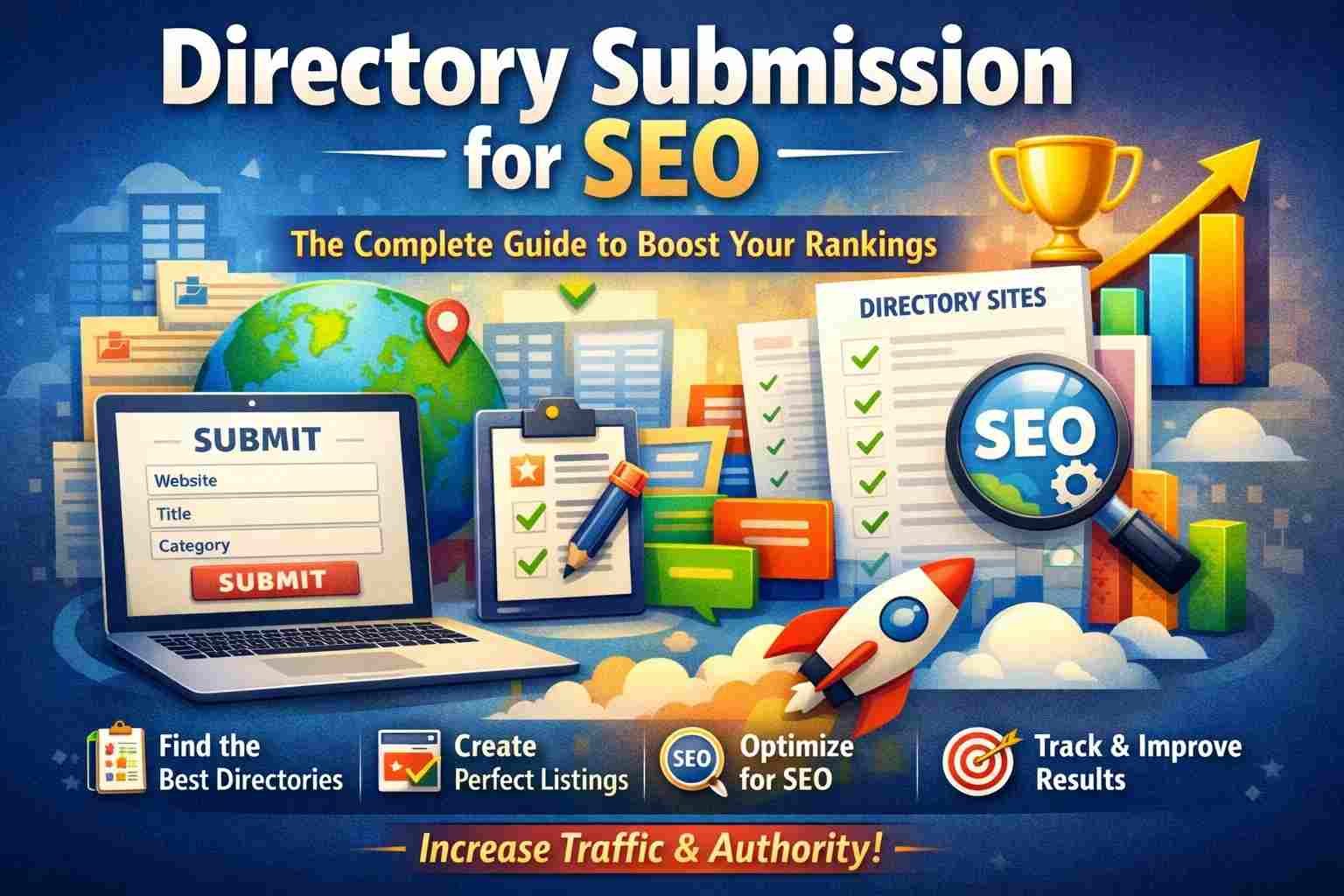
In the world of digital marketing, improving a website’s visibility on search engines is crucial. One effective off-page SEO strategy is directory submission. Though it may seem old-fashioned compared to modern techniques, when done correctly, directory submission can boost your website’s backlinks, traffic, and authority. In this article, we will explore everything about directory submission, its benefits, types, best practices, and how to do it effectively for maximum SEO impact.
What is Directory Submission?
Directory submission is the process of submitting your website’s URL and other relevant details to web directories—online platforms that list websites based on categories and niches. Think of a directory as an online “yellow pages” where users can find websites organized by topic or industry.
A typical directory submission includes:
-
Website URL
-
Website title
-
Meta description
-
Keywords
-
Category selection
Directories may also ask for contact information or a brief description of your website. The main goal is to get your website listed in reputable directories to generate quality backlinks and improve your search engine rankings.
Types of Directory Submission
Not all directories are the same. They can be classified based on submission type, approval method, and niche focus.
1. Free Directory Submission
Free directories allow you to submit your website without any charges. They may take longer to get approved and may have limited SEO benefits compared to paid directories.
Example: DMOZ (historically), Hotfrog, Ezilon.
2. Paid Directory Submission
Paid directories often have a faster approval process, higher trust, and more SEO benefits. These directories are generally more selective and ensure the listed websites are of quality.
Example: Best of the Web (BOTW), Yahoo Directory (historically paid model).
3. Niche-Specific Directory Submission
These directories focus on a particular industry or niche. For example, a technology blog might submit to tech directories, while a travel website would submit to travel directories. Niche-specific directories are valuable for targeted traffic and higher authority backlinks.
4. General Directory Submission
General directories accept websites from all categories. They are useful for building backlinks but may not provide targeted traffic.
Importance of Directory Submission in SEO
Directory submission plays a key role in off-page SEO. Here’s why:
1. Quality Backlinks
One of the primary benefits of directory submission is acquiring backlinks. High-quality backlinks signal to search engines like Google that your website is trustworthy and relevant, improving your search engine ranking.
2. Increased Website Visibility
By submitting your website to directories, your site becomes visible to users searching within the directory, increasing organic traffic.
3. Indexed Faster by Search Engines
Search engines like Google and Bing often crawl directories regularly. Being listed in a reputable directory can help your website get indexed faster.
4. Brand Awareness
Directories can increase your brand visibility among users looking for specific services or products in your niche.
5. Targeted Traffic
Niche-specific directories can drive highly relevant traffic to your website, leading to better conversion rates.
Steps to Perform Directory Submission Effectively
Directory submission is simple, but doing it wrong can harm SEO. Follow these steps for best results:
Step 1: Identify Quality Directories
-
Avoid low-quality or spammy directories.
-
Look for directories with high domain authority (DA) and good reputations.
-
Use tools like Moz, Ahrefs, or SEMrush to check DA and traffic metrics.
Step 2: Prepare Website Details
-
Website URL
-
Website Title (with main keyword)
-
Meta Description (unique, keyword-rich, and 150–160 characters)
-
Keywords (3–5 relevant keywords)
-
Category (choose the most relevant one)
-
Contact Information (if required)
Step 3: Submit Your Website
-
Follow the directory’s submission guidelines.
-
Fill in all fields carefully; avoid keyword stuffing.
-
Make sure the website is live and functioning properly.
Step 4: Track Submissions
-
Maintain a spreadsheet of directories where you submitted your website.
-
Note the submission date, category, status, and whether it’s approved.
Step 5: Follow Up and Maintain Listings
-
Some directories may take weeks to approve submissions.
-
Keep track of approved listings and update your website info if needed.
Best Practices for Directory Submission
To ensure directory submission is effective and Google-friendly, follow these best practices:
-
Focus on Quality, Not Quantity
Submitting to too many low-quality directories can be seen as spam by search engines. Target high-authority directories in your niche. -
Use Unique Descriptions
Avoid copying the same description for every directory. Google values unique content. -
Choose the Right Category
Misclassification can reduce the effectiveness of backlinks and harm user experience. -
Avoid Automated Submissions
Manual submission is always better. Automated tools can lead to spammy links. -
Keep it Natural
Your anchor text should vary naturally; don’t over-optimize with exact-match keywords. -
Update Your Listings Periodically
Check your listings regularly and update any changes in website information, offerings, or contact details.
Advantages of Directory Submission
| Advantage | Description |
|---|---|
| Quality Backlinks | Boosts search engine ranking through backlinks from reputable directories. |
| Increased Traffic | Direct traffic from directory users searching for related services or products. |
| Faster Indexing | Helps search engines find and index your website faster. |
| Brand Exposure | Improves visibility among potential customers or clients. |
| Targeted Audience | Niche directories provide highly relevant traffic. |
Common Mistakes to Avoid
-
Submitting to low-quality or spammy directories
-
Using duplicate descriptions across multiple directories
-
Choosing wrong categories
-
Ignoring directory guidelines
-
Overusing exact-match anchor texts
Free vs Paid Directory Submission: Which is Better?
Both free and paid directory submissions have their place in SEO:
-
Free directories: Cost-effective but may take longer and provide less authority.
-
Paid directories: Faster approval, higher credibility, better SEO value.
Tip: A balanced approach—submit to high-quality free directories and select paid directories for niche authority—works best.
Examples of Popular Directories for Submission
-
DMOZ (historically) – General directory
-
Hotfrog – Business directory
-
Ezilon – Regional directory
-
Best of the Web (BOTW) – Paid directory
-
Jasmine Directory – Niche-specific directory
Conclusion
Directory submission remains a reliable off-page SEO strategy if done correctly. It helps build quality backlinks, increases website visibility, improves search engine indexing, and drives targeted traffic.
Remember, the key is quality over quantity. Focus on high-authority directories, niche relevance, unique descriptions, and correct categorization. Combine directory submission with other SEO strategies such as guest posting, social media promotion, and content marketing for maximum results.
By following the best practices outlined in this guide, you can leverage directory submission as a powerful tool for SEO growth and online visibility.
 Top 100 Directory Submission Sites List (2026)